Showing posts with label Understanding and Enjoying Waterford Nature. Show all posts

Tuesday, 20 May 2014

Winter Gulls and Scarce Visitors


Adult Herring Gull by Fran O'Connell
On February 4th, local birder Arlo Jacques discovered an adult little gull at the Tramore Boating Lake. This was the eleventh different species of gull to be recorded on this small lake in 2014.
                  
So what is the status of gulls this winter in Waterford ?

Let us first deal with the most commonly found species in winter in the county. Herring, greater black-backed, lesser black-backed, common and black-headed are all numerous and widespread during wintertime. When food resources, mainly fish, are readily available numbers of each species can be very large. Greater black-backed gulls are the largest gull occurring in our waters, followed by herring gulls and the slightly smaller lesser black-backed gull. Common gull is smaller again and black-headed gull is the smallest of this group.

Adult Winter Common Gull by Bernie Sheridan
Correctly identifying gulls can be a challenge at any time. Adult gulls have a summer and a winter plumage, but are easily sorted. However large gulls take up to four years to fully mature, and ageing gulls takes experience. Herring, greater black-backed and lesser black-backed are four year gulls. This is where matters get complex. These gulls have different plumages as juveniles, first winters, first summers, second winters, second summers, third winters, third summers, fourth winters, fourth summer/adults. Now combine this with various different races of herring gull and the results can be bewildering.

Adult Great Black-Backed Gull by Fran O'Connell

Common and black-headed-gulls take a mere two years to reach maturity.  Both have distinctive plumages as juveniles, first winters, first summers and second winters before reaching adulthood.


Adult Winter Black-Headed Gull by Fran O'Connell


Now that we have that lot sorted out we can attempt to find some of the rarer species which overwinter in Waterford. Throughout the coastal areas of Ireland there has been an unprecedented influx of ‘northern’ gulls this winter. The two species involved are glaucous gulls and Iceland gulls. Both are four year gulls but are distinguished from our regular gulls by the complete lack of black colouration on their bodies and wings. Glaucous gull is large, approaching greater black-backed in size and noticeably bigger than herring gull. Iceland is usually smaller than herring gull and looks more elongated. Both species have been observed in Waterford this winter at Ardmore, Whiting Bay, Ferrypoint, Helvick, Dungarvan, Tramore, Dunmore East and Cheekpoint. Again the individuals range from first winters through to adults.
Adult Winter Lesser Black-Backed Gull by Fran O'Conell


Amongst the Iceland gulls were a number of kumliens gulls, a distinct subspecies. These can be differentiated from Iceland gulls by varying amounts of darker colouration on the tips of their flight feathers. The first occurrences of kumliens gull in Waterford were noted at Helvick Head during January this year.   

Adult Glaucous Gull by John Power
Mediterranean gulls were once a rare visitor to Ireland. In recent years they have become established as a breeding species in this country. Mediterranean gulls are regularly seen at Whiting Bay, Ardmore, Dungarvan Harbour and Tramore.

Yellow-legged gulls are very similar to herring gulls in appearance but are now treated as a separate species. Adults are best distinguished from the herring gull by their slightly darker backs and yellow legs. Kinsalbeg and Dungarvan are good for this species although in very small numbers.

Adult Iceland Gull by John Power
Kittiwake (named for its call) is a pelagic species rarely coming to land other than to breed. The breeding colony at Dunmore East is justifiably famous for its easy accessibility to human observers. In winter kittiwakes come close inshore during winter storms. Little gulls are our smallest and daintiest gull usually encountered in Waterford during or immediately after storms. Helvick Head, Ballynagaul and Tramore are notable for this species.

Adult Winter Kumlien's Gull by Richard Zamora
Ring-billed gull is a North American species which is annual in Ireland albeit in small numbers. An adult ring-billed gull has turned up every winter for a number of years at the Tramore Boating Lake. It is often very easy to observe allowing an approach down to a couple of meters in the car park.

Kittiwake by Andrew Malcolm


In addition to the above, five other species of gull, as follows, have been recorded in Waterford. Caspian gull, as its name suggests, is an Eastern European/Central Asian species. Ivory gull is an Arctic specialist usually found scavenging on dead whales, seals and dolphins. Bonaparte’s gull is a North American species named after the nephew of Napoleon Bonaparte. American herring gull is the North American equivalent of our herring gull but now recognised as a separate species. Sabine’s gull is an August – October passage migrant named after Edward Sabine, a scientist aboard John Ross’s 1818 expedition to search for the North West Passage.

Adult Winter Ring-billed Gull by Bernie Sheridan
Interestingly two other species of gull have been named after personalities associated with the search for the North West passage - Ross’s gull after the aforementioned John Ross and Franklin’s gull after John Franklin. To date neither of these two species has been recorded in Waterford.


In total, excluding sub-species, 17 full species of gull have been recorded, to date, in county Waterford.


Thursday, 13 March 2014

Resolutions and Solutions


We are now well into the New Year but it is by no means too late for resolutions. Waterford has an immense variety of and richness in its wildlife so make a decision now to get out and enjoy and experience some of these opportunities during the current calendar year.

So what can we expect?

Birds

Cattle Egret by Richard Zamora
Historically just over 300 different species of bird have been recorded in Waterford. In the last five years the numbers of different species recorded have been 187 (2013), 197 (2012), 203 (2011), 194 (2010) and 185 (2009). On the 4th of January 2014, 112 different species of bird were recorded in Waterford on that single day.

Opportunities abound to see birdlife in the county and the following are some suggestions:

Spoonbill by Fran O'Connell

Dungarvan still hosts the overwintering spoonbill. Check out Ballyneety for the spectacular male goldeneye and accompanying dowdier females. Over the past several weeks two cattle egrets have taken up residence in the Bunmahon/Seafield area - southern Europe or Africa would be their more usual winter home. The boating lake at Tramore is presently affording close-up views of shovelor, gadwall, tufted duck and snipe along with numerous gulls and other wildfowl. 
Ring-necked Duck & Tufted Ducks by Bernie Sheridan

A careful search through the gulls should yield the North American ring-billed gull and an Artic glaucous gull. A male ring-necked duck is currently wintering at Ballyshunnock reservoir.


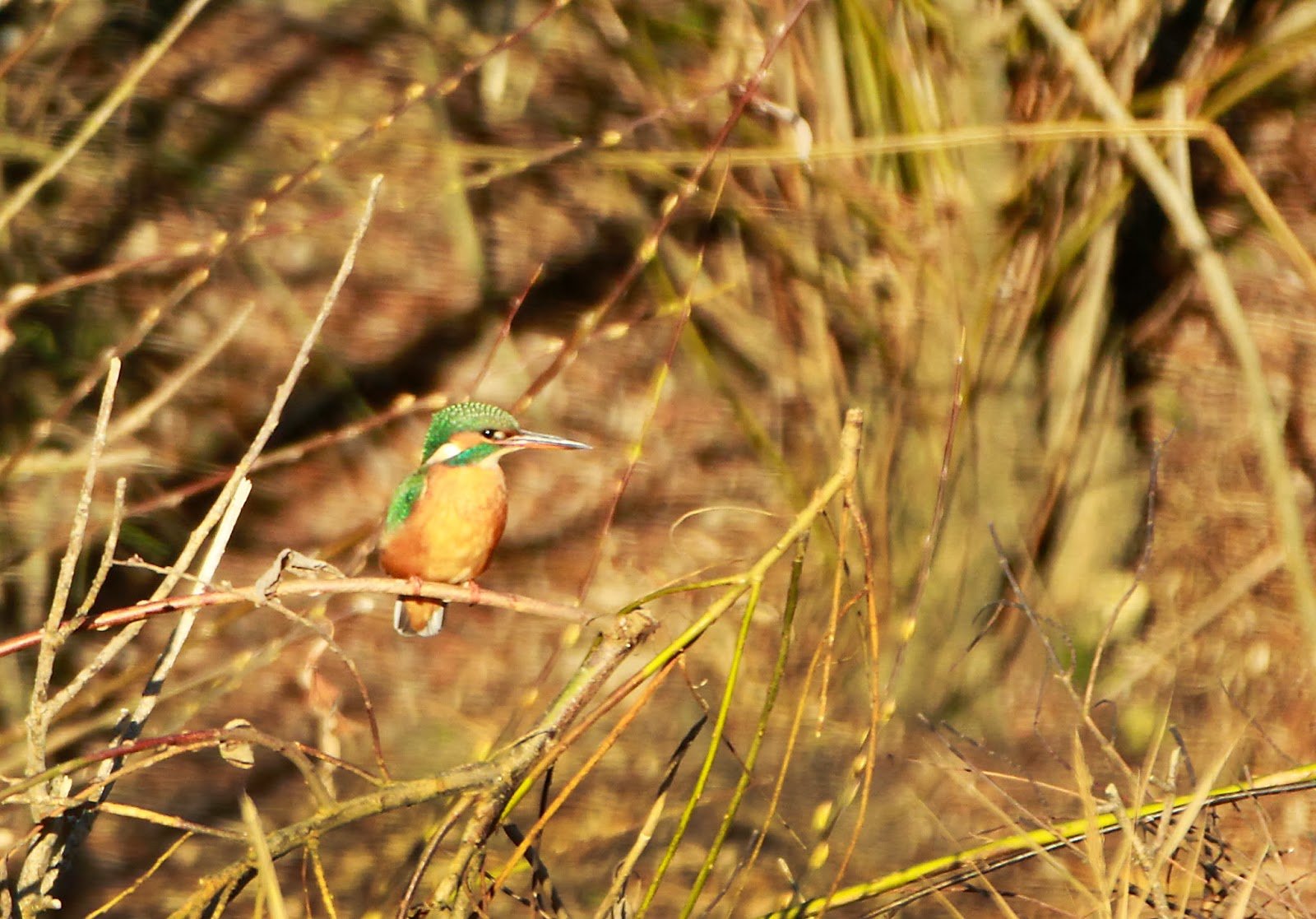
Kingfisher by Richard Zamora

A check out of the bridges crossing the rivers at Ballyvoile, Stradbally, Bunmahon and Annestown (among other rivers) should yield a dipper and perhaps a colourful kingfisher.

During spring/early summer a visit to the foothills of the Comeraghs or The Vee should produce a cuckoo. The distinctive call is obvious and with patience it should be possible to observe the bird itself.

In late April whimbrel migrate through Waterford on their way north to their breeding grounds. In some years literally thousands of these birds linger on the beach at Clonea as they feed up before resuming their journey northwards.
Whimbrel by Andrew Malcolm

Spring also offers the opportunity to experience the famous Dawn Chorus. At dawn numerous different species of bird sing loudly to proclaim their territories and re-establish contact with each other. Organised outings take place in Waterford and although it means an extremely early start it is well worth the effort.

Dipper by Fran O'Connell
In July/August watch from headlands such as Helvick and Brownstown during storms for seabirds pushed close to land by strong winds. Numbers passing can be spectacular and include shearwaters, skuas, auks, terns and other species.


Insects

With the warmer weather in spring insects make their appearance. Watch out in March and April for the spectacular male orange tip butterfly. A visit to Coumaraglinmountain in May/June should provide an opportunity to observe the green hairstreak butterfly. Its much rarer relative the purple hairstreak can be seen fluttering around the tops of oak trees in August/September. Colligan and Ballyrafter are good sites for this butterfly. The ideal habitat is the canopy of oaks overhanging streams. A visit to Mount Congreve may be rewarded with a comma – a recent Waterford coloniser.

The area between Annestown and Dunhill castle is excellent for emperor dragonfly and brown hawker in summer. Watch these large insects as they hunt and defend territories, resembling miniature helicopters as they fly to and fro.

Mammals
Fox by Andrew Malcolm

Everybody admires red squirrels and they are widespread in Waterford. The Towers at Lismore and Colligan Woods are good areas for the species. Pine martens are rarer and much more elusive but are present in the Kilrossanty and Portlaw areas. Watch the fields throughout the county at any time for foxes hunting.


Common Dolphin by Andrew Malcolm
Bats are also widespread in Waterford. Watch any waterways at dusk in the county
during spring/summer for the daubenton’s bat. Street lights attract leisler’s bats at night where they can be observed feeding.
Minke Whale by Andrew Malcolm

Harbour Seals by Bernie Sheridan
The Waterford coast is fast gaining a reputation as one of the foremost places in Europe for observing marine mammals. Fin whales (the second largest animal to ever exist on the planet), minke whales, humpback whales, bottle-nosed and risso’s dolphins are easily observable in season. Ram Head at Ardmore, Helvick Head and Tankardstown at Bunmahon are excellent vantage points. Dungarvan Harbour holds small numbers of
both grey and harbour/common seals.


Check out www.waterfordbirds.com for local wildlife updates and submission of records. If you have any questions or comments please email them to japwatntr@gmail.com.

MUD GLORIOUS MUD AND WADERS


High Tide Wader Roost by Richard Zamora
Waterford being a coastal county has large areas of estuarine mud. At first glance mud may seem to be a degraded habitat devoid of all life. Happily this is not the case. Estuarine mudflats are considered one of the richest habitats in the world. The mixture of fresh and salt waters, with abundant nutrients and organic materials supports an extremely abundant invertebrate resource. This food concentration is extremely important to birdlife, particularly waders.

Lapwing by Colum Flynn
Waders, or shorebirds in American parlance, generally occupy wet places where they probe for food such as molluscs, snails, worms and other invertebrates. Waders include a large number of different species characterised by different bill and leg lengths. This allows each species to probe at different depths in the mud to locate prey, thus avoiding direct competition. It also guarantees that the prey species can survive in sufficient numbers to ensure continued existence.

Waterford is of vital importance to wader survival in two respects –
Long-Billed Dowitcher by Liam Cahill
overwintering birds, and passage migrants.

Large numbers of waders choose Waterford to overwinter. Their feeding is dictated by the tides. Waders only stop feeding at high tide when the mud is totally covered. Night-time is not an obstacle – they simply continue probing for food during the hours of darkness.

Whimbrel & Grey Plover by Pat Veale
Waders are long distance migrants moving in spring to their breeding grounds in the far north from their over-wintering areas here, in Southern Europe and Africa. In autumn they reverse their migration along with their progeny. These journeys are not done in one step. The waders stop off at traditional feeding areas upon which they have become dependent over millennia. They feed at these staging posts before continuing with their onward migrations. Any loss or damage to these feeding areas would be catastrophic to their wellbeing. Whimbrel, migrating to their breeding grounds and stopping on the way to feed in Waterford in late April, is an excellent example of passage migration.
Dunlin by Fran O'Connell

Black-Tailed Godwit by Colum Flynn
The following illustrates the absolute importance of Waterford to waders as a winter refuge in terms of numbers: Dungarvan is internationally important for black-tailed godwit and nationally important for oystercatchers, golden plover, grey plover, knot, dunlin, bar-tailed godwit, greenshank, redshank and turnstone. Tramore is nationally important for golden plover, grey plover and black-tailed godwit whilst Waterford Harbour holds nationally important numbers of oystercatcher and black-tailed godwit. The Blackwater Callows are internationally important for black-tailed godwit and nationally important for curlew.
Lesser Yellowlegs by Colum Flynn

Occasionally Waterford plays host to rare American waders (shorebirds). At different times long billed dowitcher, American golden plover, pectoral sandpiper, lesser yellow-legs and semi-palmated sandpiper have graced the Cunnigar.
#


Sanderling by Fran O'Connell
Viewing waders in Waterford is easy. Bar-tailed and black-tailed godwits are readily located in large numbers on estuarine mud virtually anywhere within the county. Turnstone get their name from their habit of turning over stones and seaweed to locate prey. Dunlin are the ubiquitous small wader often in large flocks. Both dunlin and turnstone are widespread throughout Waterford. Watch out for the small grey sanderling feeding along the tideline.
Turnstone by Andrew Malcolm


Curlew by Liam Cahill
 Sanderling resemble toy soldiers as they advance and retreat with the breaking waves. High tide roosts present an opportunity to view different species in close proximity and to study the varied sizes and plumages. Look for and listen to the widespread lapwing with its distinctive pee-wit call. The long de-curved bill of the curlew is unmistakeable, coupled with its plaintive ‘curlew’ call. 

Look among the wader flocks for the plump, stubby billed, medium sized, pale coloured grey plover. The grey plover is easily recognised by its dark axillaries (armpits) once in flight.
Redshank by Andrew Malcolm


 Both redshank and greenshank are common throughout Waterford and best recognised by their respective leg colouration and easily recognisable calls.


Check out www.waterfordbirds.com for local wildlife updates and submission of records. If you have any questions or comments please email them to japwatntr@gmail.com.

Tuesday, 4 February 2014

Pelagic Birding and Dolphins

Gannet by Andrew Malcolm
On Friday the 9th of August, 13 local birders and crew, captained by Martin Colfer, sailed from Youghal
along the Waterford coast in search of pelagic birds and perhaps some whales and dolphins.

Pelagic birds are birds of the open seas, which are unlikely to be encountered on land other than at breeding colonies.

Black Guillemot by Fran O'Connell
Gannets were quickly seen. These very large seabirds sustain themselves entirely by fishing. They dive into the sea, often from a great height, in pursuit of their prey. Once almost wiped out as a breeding species in Ireland, they are now happily thriving.

Auks (family name Alcids) are well represented in Irish waters by guillemots, black guillemots, razorbills and, everybody’s favourite, puffins. Looking comical and friendly puffins are, in reality, tough, ocean going birds, capable of surviving the harshest conditions. Puffins, like all auks, fish by pursuing their prey underwater, using their wings to propel themselves forwards.
Puffins by Dominic Clancy

Storm petrels are a tiny (sparrow-sized) totally pelagic species, which dip feed on the ocean surface. The name petrel is thought to derive from St Peter as their pattering on the surface of the sea is reminiscent of the Saint’s ability to walk on water. Storm Petrels are also known as “Mother Carey’s Chickens” after a supernatural figure representing the sea. Petrel’s tiny seemingly fragile appearance again belies their ability to survive at sea in the most extreme conditions. During the trip storm petrels were very much in evidence.
Manx Shearwater by Pat Veale


Sooty Shearwater by Andrew Malcolm
Shearwaters are a truly pelagic species undertaking huge annual migrations. The name derives from their flying method, whereby they appear to shear across the waves. Manx shearwaters breed in Ireland and migrate to waters off Brazil and Argentina in the winter. They were regular on the trip as were small numbers of sooty shearwaters. “Sooties” breed on southern ocean islands and disperse northwards along the western side of the Atlantic Ocean, moving east into our waters in July/August before returning south down the eastern side of the Atlantic to their remote breeding colonies in November/December.

Fulmar by Fran O'Connell
Almost always on view during the trip was the fulmar. Fulmars look superficially like gulls but their stiff winged flight and tube noses are obvious differences and more reminiscent of their close relatives albatrosses. The tube nose is an adaptation for excreting salt, which is picked up through their prey and seawater. Now a common breeding bird in Ireland this was not always the case. However with the demise of the human population on St. Kilda in Scotland and the subsequent reduction in hunting, fulmars quickly moved into all available breeding niches in Britain and Ireland.

Also in attendance on the pelagic trip was the kittiwake. This species is
Kittiwake by Dominic Clancy
named after its call. The kittiwake is a beautiful, dainty, small gull with jet black wing tips as if dipped in ink. This is a truly ocean going species which will never be encountered in dumps (as are other gulls) and only rarely on land. Dunmore East presents a good opportunity to see kittiwakes as they breed there on the cliffs in spring/summer.

Other species seen on the trip included several species of large gull, terns and a small pod of porpoises.
Martin Colfer regularly runs bird watching and whale watching trips from Youghal and is available on 087 265 7177.

Bottlenose Dolpin by Bernie Sheridan
Dungarvan was recently graced by a pod of bottlenose dolphins, comprising of ten to twelve individuals. The dolphins lingered for a few days, hunting between Ballinacourty Lighthouse and Ballyvoile. Bottlenose dolphins track their prey by the use of echo location. These dolphins are regular in Irish waters, with a resident population in the Shannon estuary and the most famous of all “Fungie” in Dingle harbour.  

Friday, 31 January 2014

Why do birds sing?

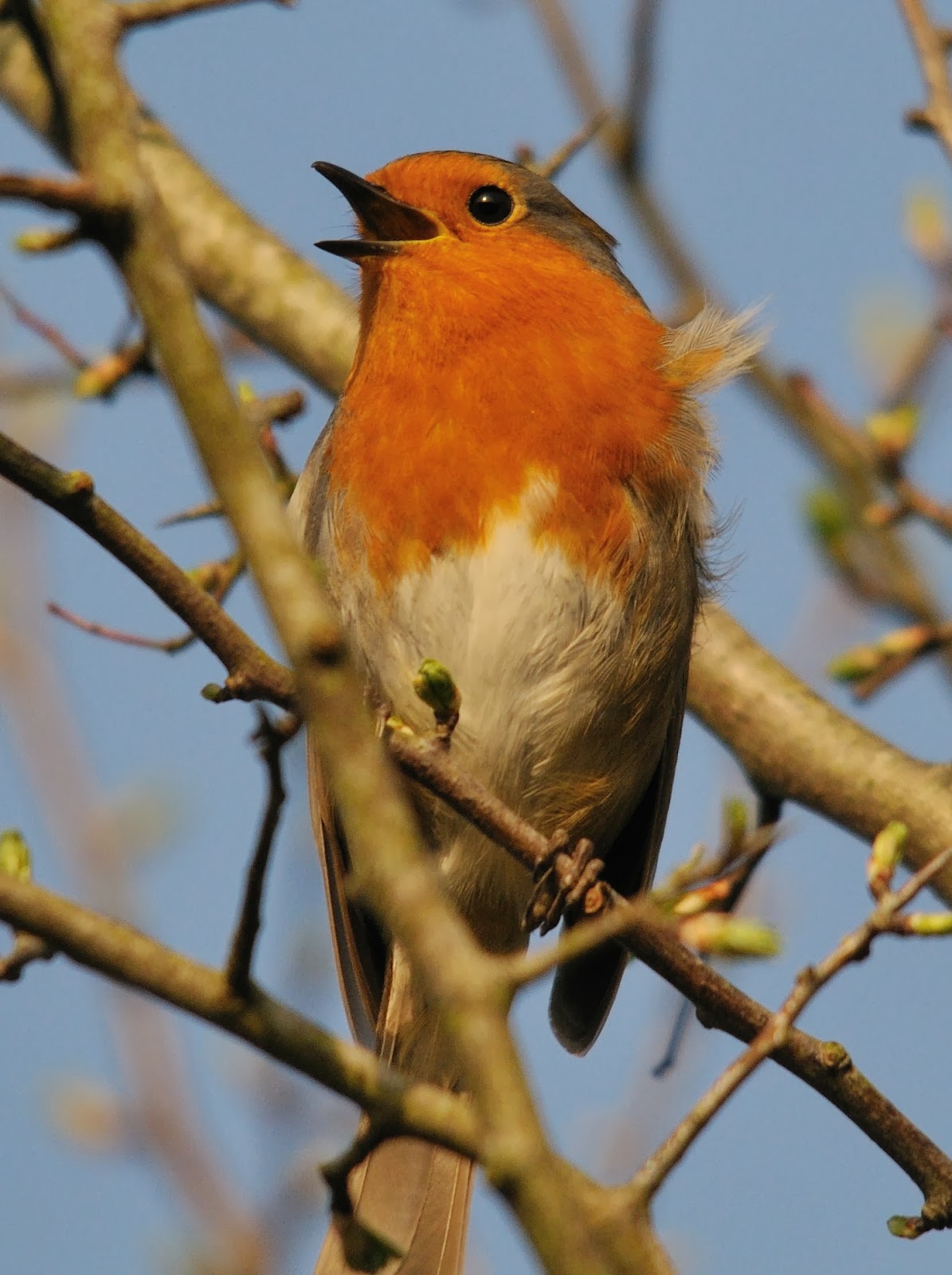
Robin by Andrew Malcolm
Birds sing in order to communicate and for two main reasons -
  • to attract a mate
  • to defend a territory
A male bird singing in spring and early summer (and it is mostly males) is proclaiming that he is in tip-top breeding condition and is ready and able to mate. Females in the vicinity are attracted by the song and can judge by it whether or not the singing male will make a suitable mate. She can decide by the quality of his song as to whether he is strong and healthy enough for the rigours of mating and providing food for their offspring.

The singing male is also defending his territory. He is, in strident terms, telling
Garganey by Richard Zamora
other males that this patch is his, as is the female, and to keep well away. Just as the female is attracted to the male's song, other males are repelled by it. This largely avoids unnecessary physical confrontation between males which could lead to injury to either or both. An injury to any wild animal greatly reduces its survival chances. Furthermore, if a male for whatever reason, does not defend his territory, another, probably younger male, will quickly move in and take over.

Song Thrush by Fran O'Connell
Perhaps the best time to listen to birdsong is at dawn, the aptly named 'Dawn Chorus'. Why should birds sing most actively at dawn? At dawn the air has not warmed up so that conditions are usually fairly still and sound carries further. The males are also proclaiming that they are still alive and active and re-asserting their claims to territory and females after the night. It is also thought that feeding opportunities being limited at dawn, the birds can devote their time more readily to singing.


Wren by Fran O'Connell
By mid-July, singing will have very much declined. Most birds will have mated by then and competition for mates and territory will have fallen off. By late summer many species of bird will be in active moult and the last thing any bird will want is to attract a predator whilst their flying ability is impaired.

Skylark by Andrew Malcolm
In addition to singing, birds have a range of other vocalisations. These are used to warn other birds of threats such as predators and other dangers. Many species have contact calls, particularly used in feeding and migrating flocks to keep in touch and in communicating with fledged young. Most of us are familiar with the alarm call of a blackbird when disturbed or the 'tick tick tick' warning call of a robin.

Reed Warbler by Fran O'Connell
Some notable songsters easily heard in Waterford include the skylark with its seemingly endless cascade of song often delivered from high up in the sky. The song thrush is readily heard repeating each phrase of its song over and over again. Listen out for the reed warbler singing from deep cover in reed beds or the very loud song of a wren which seems impossibly vocal for such a tiny bird.

Bird song recordings are easily accessed on the internet and can be downloaded as apps. An excellent and informative book on bird song is 'Bird Watching With Your Eyes Closed' by Simon Barnes which introduces many familiar birdsongs of Britain and Ireland. An accompanying podcast can be downloaded from the internet.
Yellow Wagtail by Bernie Sheridan

RECENT NEWS


The discovery of an adult male yellow wagtail at Curragh Beach, Ardmore was a nice find. Disappointingly the bird departed after a short time, to the annoyance of would be observers. A pair of garganey was seen at Ballinlough near Kill. Garganey are a small duck which interestingly are the only duck species which migrates from the south in Africa into Europe to breed. Hopefully this pair might successfully raise a brood in County Waterford this year. 

Thursday, 9 January 2014

Celebrating Spring Migration in Waterford

Swallow by Andrew Malcolm


Every spring millions upon millions of birds migrate from Africa into Europe. They do so primarily to take advantage of the super abundance of food and longer days available in the northern hemisphere during spring, summer and autumn. These conditions are a prerequisite for successful breeding. Spring migration is concentrated in April and May and Waterford fully participates in this phenomenon.

For many, the swallow is the harbinger of spring. Due to the recent adverse cold weather conditions swallows were slow to arrive this year but are now here in good numbers.
Swift by Andrew Malcolm


Swifts are only just now appearing over our towns and will be the earliest departing migrant being mostly gone by late august.


Blackcap by Fran O'Connell
Being insectivorous warblers are mainly summer visitors to this country although small numbers over winter. Blackcaps can be heard singing their rich melodic song from cover at present and with a little patience close observation will be rewarded.


Little Tern by Fran O'Connell


Terns are a pelagic seabird also known as sea swallows for their elegant flight. Sandwich terns can now be easily observed fishing close inshore along the Waterford coast while continually uttering their harsh call. A little tern (a scarce
Waterford passage migrant) was recently briefly observed feeding along Clonea beach before heading to its breeding grounds.


Whimbrel by Andrew Malcolm
Some migrating species use Ireland as a staging post to feed up on their way to their breeding grounds far to the north of us. Each spring whimbrel (somewhat resembling curlew in appearance) feed on beaches in Waterford before continuing on to their breeding sites in Iceland. Black throated divers do not breed in Ireland so the adult summer plumaged bird recently observed at Helvick was most likely feeding up on passage north.


Firecrest by Paddy Dwan
Firecrests vie with the more familiar goldcrest as the smallest bird occurring in Europe. This spring Waterford experienced an unprecedented influx of at least three of this beautiful little bird. Further small numbers were recorded in Wexford. Whereas these occurrences were most likely a cold weather movement there remains the tantalising possibility that these birds were prospecting future breeders.


With so many birds moving from Africa into Europe there are bound to be a few overshoots. Hoopoes normally breed in Southern Europe but every year small numbers migrate way beyond their target area. True to form a hoopoe graced Creadan Head this spring lingering for several days to the delight of many bird watchers.

Hoopoe by Richard Zamora

Watch out over the next several weeks for cuckoos, dragonflies and butterflies such as holly blue and peacock.

Check out www.richzamora-images.com for images of Waterford wildlife.
Check out www.waterfordbirds.com for local wildlife updates and submission of records. If you have any questions or comments, please email them to japwatntr@gmail.com