Friday, 31 January 2014

Why do birds sing?

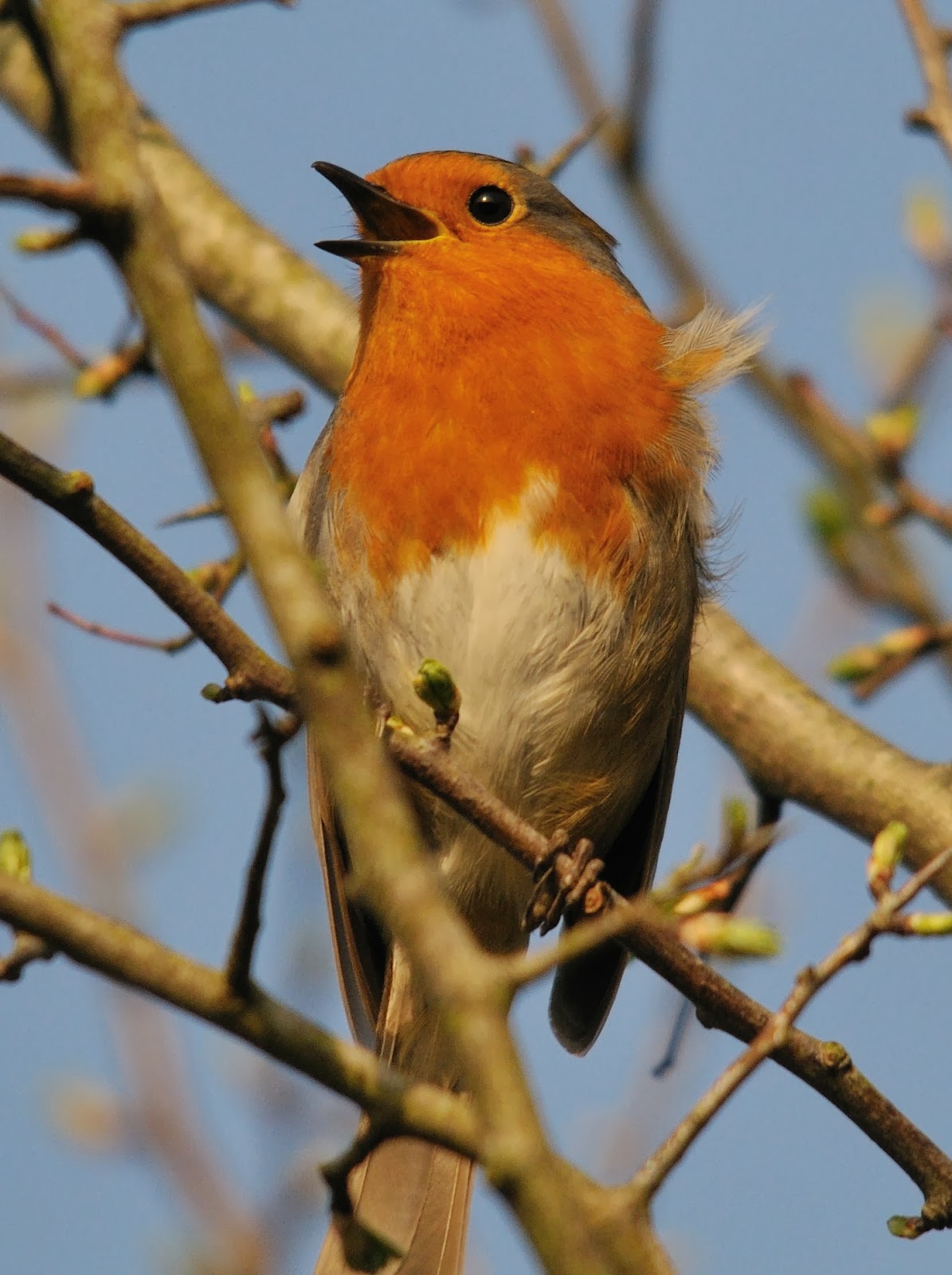
Robin by Andrew Malcolm
Birds sing in order to communicate and for two main reasons -
  • to attract a mate
  • to defend a territory
A male bird singing in spring and early summer (and it is mostly males) is proclaiming that he is in tip-top breeding condition and is ready and able to mate. Females in the vicinity are attracted by the song and can judge by it whether or not the singing male will make a suitable mate. She can decide by the quality of his song as to whether he is strong and healthy enough for the rigours of mating and providing food for their offspring.

The singing male is also defending his territory. He is, in strident terms, telling
Garganey by Richard Zamora
other males that this patch is his, as is the female, and to keep well away. Just as the female is attracted to the male's song, other males are repelled by it. This largely avoids unnecessary physical confrontation between males which could lead to injury to either or both. An injury to any wild animal greatly reduces its survival chances. Furthermore, if a male for whatever reason, does not defend his territory, another, probably younger male, will quickly move in and take over.

Song Thrush by Fran O'Connell
Perhaps the best time to listen to birdsong is at dawn, the aptly named 'Dawn Chorus'. Why should birds sing most actively at dawn? At dawn the air has not warmed up so that conditions are usually fairly still and sound carries further. The males are also proclaiming that they are still alive and active and re-asserting their claims to territory and females after the night. It is also thought that feeding opportunities being limited at dawn, the birds can devote their time more readily to singing.


Wren by Fran O'Connell
By mid-July, singing will have very much declined. Most birds will have mated by then and competition for mates and territory will have fallen off. By late summer many species of bird will be in active moult and the last thing any bird will want is to attract a predator whilst their flying ability is impaired.

Skylark by Andrew Malcolm
In addition to singing, birds have a range of other vocalisations. These are used to warn other birds of threats such as predators and other dangers. Many species have contact calls, particularly used in feeding and migrating flocks to keep in touch and in communicating with fledged young. Most of us are familiar with the alarm call of a blackbird when disturbed or the 'tick tick tick' warning call of a robin.

Reed Warbler by Fran O'Connell
Some notable songsters easily heard in Waterford include the skylark with its seemingly endless cascade of song often delivered from high up in the sky. The song thrush is readily heard repeating each phrase of its song over and over again. Listen out for the reed warbler singing from deep cover in reed beds or the very loud song of a wren which seems impossibly vocal for such a tiny bird.

Bird song recordings are easily accessed on the internet and can be downloaded as apps. An excellent and informative book on bird song is 'Bird Watching With Your Eyes Closed' by Simon Barnes which introduces many familiar birdsongs of Britain and Ireland. An accompanying podcast can be downloaded from the internet.
Yellow Wagtail by Bernie Sheridan

RECENT NEWS


The discovery of an adult male yellow wagtail at Curragh Beach, Ardmore was a nice find. Disappointingly the bird departed after a short time, to the annoyance of would be observers. A pair of garganey was seen at Ballinlough near Kill. Garganey are a small duck which interestingly are the only duck species which migrates from the south in Africa into Europe to breed. Hopefully this pair might successfully raise a brood in County Waterford this year. 

Thursday, 9 January 2014

Celebrating Spring Migration in Waterford

Swallow by Andrew Malcolm


Every spring millions upon millions of birds migrate from Africa into Europe. They do so primarily to take advantage of the super abundance of food and longer days available in the northern hemisphere during spring, summer and autumn. These conditions are a prerequisite for successful breeding. Spring migration is concentrated in April and May and Waterford fully participates in this phenomenon.

For many, the swallow is the harbinger of spring. Due to the recent adverse cold weather conditions swallows were slow to arrive this year but are now here in good numbers.
Swift by Andrew Malcolm


Swifts are only just now appearing over our towns and will be the earliest departing migrant being mostly gone by late august.


Blackcap by Fran O'Connell
Being insectivorous warblers are mainly summer visitors to this country although small numbers over winter. Blackcaps can be heard singing their rich melodic song from cover at present and with a little patience close observation will be rewarded.


Little Tern by Fran O'Connell


Terns are a pelagic seabird also known as sea swallows for their elegant flight. Sandwich terns can now be easily observed fishing close inshore along the Waterford coast while continually uttering their harsh call. A little tern (a scarce
Waterford passage migrant) was recently briefly observed feeding along Clonea beach before heading to its breeding grounds.


Whimbrel by Andrew Malcolm
Some migrating species use Ireland as a staging post to feed up on their way to their breeding grounds far to the north of us. Each spring whimbrel (somewhat resembling curlew in appearance) feed on beaches in Waterford before continuing on to their breeding sites in Iceland. Black throated divers do not breed in Ireland so the adult summer plumaged bird recently observed at Helvick was most likely feeding up on passage north.


Firecrest by Paddy Dwan
Firecrests vie with the more familiar goldcrest as the smallest bird occurring in Europe. This spring Waterford experienced an unprecedented influx of at least three of this beautiful little bird. Further small numbers were recorded in Wexford. Whereas these occurrences were most likely a cold weather movement there remains the tantalising possibility that these birds were prospecting future breeders.


With so many birds moving from Africa into Europe there are bound to be a few overshoots. Hoopoes normally breed in Southern Europe but every year small numbers migrate way beyond their target area. True to form a hoopoe graced Creadan Head this spring lingering for several days to the delight of many bird watchers.

Hoopoe by Richard Zamora

Watch out over the next several weeks for cuckoos, dragonflies and butterflies such as holly blue and peacock.

Check out www.richzamora-images.com for images of Waterford wildlife.
Check out www.waterfordbirds.com for local wildlife updates and submission of records. If you have any questions or comments, please email them to japwatntr@gmail.com

Some Success Stories

Unfortunately, all too often, reports on bird populations deal with declining numbers and even extinctions so it is very pleasing to report on some success stories.

Collared Dove by Fran O'Connell
The collared dove is a pale, buff grey, medium sized dove with a distinctive black ‘collar’ across the neck, sides and a long tail. The collared dove started spreading across Europe in the early 20th century reaching Great Britain in the early 1950s and Ireland by 1959 (although anecdotal evidence suggests it may have reached Dungarvan prior to that date). It has now spread throughout Europe and North Africa. It is well established in North America but possibly as a result of introductions and escapees. Interestingly, collared doves are sedentary and do not normally migrate. Collared doves are widespread across Waterford, particularly in urban areas and regularly come to garden feeding stations, sometimes in large numbers.

Reed Warbler by Paul Walsh
The reed warbler is a migratory bird arriving in Ireland in early April and May and departing in September/October. Technically an acrocephalus warbler, it is a brown un-streaked bird, which, as its name suggests occupies reedbeds. It has a distinctive song, which is often the best indicator of its presence in dense reed. With patience reed warblers can be seen in reedbeds. Virtually unknown in Ireland until the 1960s, it has undergone a remarkable expansion in this country and is now well established in suitable habitat in Waterford.  Reedbeds along the rivers Blackwater, Suir and Bride are particularly good for encountering reed warblers.

Little Egret by Fran O'Connell
Little egrets are an all white plumaged, medium sized, elegant heron with a black pointed bill and black feet with yellow toes. Almost unknown in Ireland until the late 1980s, little egrets started occurring more regularly and became resident. Breeding was proven in 1997 for the first time in this country in Co. Waterford. In subsequent years other colonies were established and little egrets have now spread to most parts of Ireland and are common in Waterford in suitable aquatic habitats. Numbers in excess of 50 birds can sometimes be seen at Waterford roosts.

Buzzard by Andrew Malcolm

Ireland has a paucity of birds of prey compared to Great Britain and mainland Europe. Buzzards are one of the most common raptors (birds of prey) in Britain and Europe but until recently were extremely rare in Ireland. However, in recent years buzzards have begun rapidly expanding throughout this country and now are seen in every county. Buzzards are medium sized raptors with broad wings, which they hold in a shallow v while soaring. Buzzards can be seen perched on posts, poles and trees and soaring in the skies above. Buzzards are increasingly common and easily seen throughout Waterford.


RECENT SIGHTINGS AND NEWS

Caspian Gull by Paul Archer
The most exciting recent event was the discovery of a caspian gull at Dunmore East by Waterford based birder, Paul Archer. Caspian gulls are native to Eastern Europe and Central Asian. Along with being extremely rare in Ireland, caspian gulls present a very difficult identification challenge, making Paul’s achievement all the more noteworthy. The weather at Dunmore East was extremely foul at the time and not very conducive to bird watching. However, the gull lingered long enough for birders from all over Ireland to get to see and admire it. For many it was a very long awaited and appreciated addition to their Irish bird list. Along with the caspian gull a further 11 species of gull were noted in Waterford on one day which is very high by national norms.

Wheater by Andrew Malcolm
 An adult male ring-necked duck continues to over winter at Knockaderry reservoir, as does a spotted redshank at Tramore back strand.

Spring migration has already begun with several wheatears and sand martins recently sighted in Waterford. Over the next several weeks look out for swallows, sandwich terns and perhaps an exotic hoopoe.


Check out www.waterfordbirds.com for local wildlife updates and submission of records. If you have any questions or comments, please email them to japwatntr@gmail.com


Monday, 4 February 2013

HABITATS AND BIODIVERSITY


Coastal Habitat by Paul Archer

Biodiversity can be defined as the variety of life in a particular location.
Biodiversity is driven by habitats and climate and Waterford, being a coastal county, boasts a number of diverse habitats. Waterford also experiences four distinct seasons.

Being located on the sea gives Waterford a rich marine coastal habitat. With abundant fish and mollusc populations this environment can support a large diversity of mammals such as seals, porpoises, dolphins and whales. Birds are also well represented with gannets, gulls, terns, shearwaters, divers, auks, petrels and parasitic skuas. Sea cliffs too are important breeding grounds for choughs, kittiwakes and other seabirds.

Black Tailed  Godwits Feeding on Estuarine Mud by Richard Zamora
Estuarine mudflats are considered one of the richest habitats in the world. The mixture of fresh and salt waters, with abundant nutrients and organic materials, supports an extremely abundant invertebrate resource. This food concentration attracts huge numbers of waders such as golden plover, knot, godwits, dunlin and duck. In Waterford, estuarine mudflats support nationally and internationally important numbers of waders and are an essential staging post for migrating and over-wintering birds. Important estuarine mudflats are located at Dungarvan, Tramore and Waterford harbour.

Lakes and reservoirs, although not extensive in Waterford, do attract various ducks, swans, grebes, moorhen and coots. In spring, summer and autumn this habitat type attracts flying insects, which provide an important food source for swallows, martins and swifts.

Riverside Habitat by Liam Cahill 
Rivers and streams are a lineal habitat and support specialist birds such as dipper, kingfisher and grey wagtail. Also found along rivers and streams are mammals such as otter, mink and the specialist daubenton’s bat. Slower rivers, streams and pools attract dragonflies and frogs.

Marshes and bogs provide an important habitat for amphibians and birds such as sedge warbler, reed warbler and harriers. Good examples of marsh and bog are located outside Dungarvan, at Dunhill, Belle Lake and Fennor.

Traditional farmland is a very diverse habitat with hedgerows, meadows and cropland. Fallow fields in winter are a particularly important feeding ground for thrushes (fieldfare and redwing), finches, whooper swans and waders together with their attendant predators and barn owls. Mammals such as foxes, badgers, rabbits and hares are also well represented. Wildflowers are a very important food source for insects.

Ring Billed Gull by Bernie Sheridan
Forests and woodlands, in particularly deciduous, are important for songbirds, and specialist species including crossbill, long-eared owls, nightjar and woodcock. Woodland also provides essential cover for deer and the rare and elusive pine marten. Forest paths and clearances are also very good for butterflies and moths.

Gardens are an increasingly important habitat for birds given the availability of food provided by householders, and berries on various ornamental shrubs. Garden flowers are also very important to butterflies, bees and other insects.

During spring, summer and autumn the sky becomes an important habitat in its own right. Huge numbers of insects including moths become available in the warmer weather providing food by day for swallows, swifts, martins and flycatchers. By night nightjars and various bats replace these birds. In winter this food source disappears forcing the birds to migrate to sunnier climes and the bats to hibernate.

Waxwings Feeding by Richard Zamora
December has generally seen an unprecedented influx of waxwings into Waterford and Ireland. This invasion is a consequence of berry failure in their normal range. Flocks of waxwing have been encountered in Waterford City, Dungarvan, Cappoquin, Dunmore East and elsewhere. The first winter male surf scoter, spoonbill, black-necked grebe and long-tailed ducks remained into the New Year at Dungarvan. Countywide reports of brambling are still occurring albeit in small numbers. A glaucous gull and several purple sandpipers are over wintering at Dunmore East along with an adult ring-billed gull at Tramore boating lake.

Greater Spotted Woodpecker by Dick Coombes
Perhaps the most exciting recent news concerned the possibility of a great-spotted woodpecker drumming in County Waterford. Although Wicklow is still the stronghold with well over 25 known pairs, breeding has also been proven in Wexford, Kilkenny, Dublin and probably Louth. A scattering of reports increasingly come in from adjacent counties (Kildare, Monaghan, Offaly, Meath and Tipperary.) so they are definitely doing well and gradually spreading. Hopefully this may be the first indication that this beautiful bird is colonising County Waterford.

Check out www.waterfordbirds.com for local wildlife updates. If you have any questions or comments, please email them to japwatntr@gmail.com. To view previous articles check out www.understandingwaterfordnature.blogspot.com

Tuesday, 4 December 2012

Whales and Dolphins by Andrew Malcolm and John Power

Fluking Humpback Whale by Andrew Malcolm

It might well come as a surprise to many people that Ireland is one of the best places
in Europe to go whale watching. Furthermore, here in county Waterford we are
doubly blessed in that the second largest animal ever to have lived on the planet is
regularly to be encountered not too far off our coastline. At up to 22m in length the fin
whale is only surpassed in size by the blue whale, and visits our inshore waters to feed
on the herring that gather here in huge shoals during the winter months. This explains
the old name given to them by fishermen of ‘herring hogs’
Fin Whale by Andrew Malcolm

For several years these behemoths of the sea have been recorded from November
until March feeding due south of Ram Head at Ardmore, where due to the distance
offshore of up to 15km they could only be viewed with quality watching gear.
However, in more recent years these animals have been spotted feeding very close
inshore from Ballyvoyle Head to Dunmore East. On one occasion they came in so
close to the cliffs under Tankardstown that they could be heard breathing (no need for
any type of watching gear that time!) Remarkably these animals were less than 1 km
offshore in water only 11m deep, so they were more or less ‘paddling’!
Goldfinch Mule by Fran O'Connell

How do you spot a fin whale? Well, as they are of course mammals, they have to
come to the surface to breathe and when they exhale, the 6m high ‘blow’ of water
vapour is quite a tell-tale indicator of its presence. Usually they have a sequence of up
to 10 breaths at the surface with a gap of 10-15 seconds between them before they
dive again. They can then stay underwater for anything up to 9 minutes. Sea birds will often gather around where a whale is feeding in much the same way that they will
follow a trawler, picking up scraps from the whales feast, so if you see a lot of birds
Spoonbill by Andrew Malcolm
in a concentrated spot then that could well be a good place to keep an eye on. These
birds will often also follow the large groups of common dolphins that are also to be
found at this time of year joining in the bonanza of food. These pods of dolphins can
often be widely spread out and include several hundred animals.

Humpback whales are increasingly being seen at this time of year off the Waterford/
Wexford coast. The most charismatic of the whale species to be found off our shores,
they are the only whales that will ‘fluke’, that is lift their tail out of the water when
they dive. The markings under their tail is unique to each individual animal, rather
like a fingerprint is to us, and is used as a cataloguing method to help identify animals
that might return again to our shores or elsewhere in the North Atlantic.


For more information or to report a sighting of a whale, dolphin or porpoise visit
Waxwing Male & Female by Colum Flynn
www.iwdg.ie

If you are interested in a trip out from Dunmore East contact Martin Colfer at
www.charterangling.ie


LATEST NEWS AND EVENTS

The regularly over-wintering spoonbill has returned to Dungarvan for a further winter
Waxwing Male & Female by Colum Flynn
and can be seen from the Cunnigar or Western Bay – best looked for at high tide. Up
to 15 crossbills have taken up residence on the Ballinacourty golf club most easily
seen immediately behind the pier. Three female long-tailed ducks (old squaw in

American parlance) are between the Lookout and the Cunnigar. A hybrid/mule finch
has been showing up at various feeders in Dungarvan. A female surf scoter (north
American duck) is present off the Lookout.
A major influx of waxwings is taking place in both Britain and Ireland. The name
Brambling by Mick Cowming
is derived from the colouration on their feathers reminiscent of coloured wax.
This feature combined with an obvious large crest on their crown makes them
unmistakeable. These beautiful birds feed on berries and can be encountered almost
anywhere even in small urban gardens. Another bird being seen this winter is the
brambling – an irruptive finch. Please report any sightings of either species.

Check out www.waterfordbirds.com for local wildlife updates and submission
of records. If you have any questions or comments, please email them to
japwatntr@gmail.com


Monday, 3 December 2012

Feeding Birds In Your Garden

Goldfinch by Fran O'Connell

As winter draws in the days are shortening and the weather is getting colder. This diminishes the feeding opportunities for birds in two respects. Firstly, the amount of food available reduces as winter progresses. Secondly, with the reduced daylight hours the actual time available for feeding is more limited. The colder weather also uses up a bird’s energy resources more quickly making feeding and availability of food so much more important. Thus by providing safe regular food householders can make a real difference to the well being of our feathered friends. Indeed, in severe cold weather conditions feeding can make the difference between their survival or otherwise.
By attracting birds into our gardens it also gives us the chance to observe them at close quarters from the comfort of our homes. Thus the opportunity presents itself to observe various species feeding together and to compare their various plumages. Watching their antics, squabbles and different feeding strategies leads to endless enjoyment and even a little serious study. The photographer should also have many good chances for an excellent shot.

Siskin by Andrew Malcolm
LIKELY SPECIES

Birdwatch Ireland has been conducting a winter garden bird survey for a number of years. The results for the 2011 winter (ranked as gardens most frequently visited) was as follows:

1 Robin
  9   Goldfinch
17 Pied wagtail
25 Long-tailed tit
2 Blackbird
10   Coal tit
18 Wood pigeon
26 Lesser redpoll
3 Blue tit
11   House sparrow
19 Collared dove
27 Bullfinch
4 Chaffinch
12   Greenfinch
20 Hooded crow
28 Sparrow hawk
5 Great tit
13   Dunnock
21 Blackcap
29 Fieldfare
6 Magpie
14   Wren
22 Redwing
30 Feral pigeon
7 Starling
15   Jackdaw
23 Mistle thrush
31 Goldcrest
8 Song thrush
16   Rook
24 Siskin
32 Brambling


Obviously not all of these species will occur in every garden but the majority may do so over the course of the winter.
Birdwatch Ireland conducts their survey each winter and for those interested in participating this winter details are on their web site as are results of previous surveys.


FOOD

Great Tit by Liam Cahill
Birds may be fed a wide range of foodstuffs. Among the most popular (from the birds perspective) are peanuts, nyjer seed and sunflower seed. These are high in energy and oil and will readily attract a variety of species including siskins, redpoll and goldfinch. The disadvantage of these is their cost. In recent years they have increased massively in price and consideration should be given to less costly alternatives. These include flaked maize, flaked barley and rolled oats along with commercially prepared wild birdseed. Fat balls are very attractive to a variety of species along with being very nutritious. They can be purchased or prepared at home. Apples (windfalls) are very popular with thrushes and blackbirds and readily attract blackcaps. Raisins, cake and boiled rice are also very acceptable.
In cold weather naturally occurring water freezes. Birds still need to drink and a supply of unfrozen water may prove a lifesaver. Remember to make fresh water available during cold spells.


Blackbird by Fran O'Connell
EQUIPMENT

Bird feeders are a very efficient method of feeding smaller birds and conserving peanuts and expensive seed such as nyjer and sunflower. Bird tables are an attractive way of presenting food and observing the action. A note of caution – equipment needs to be regularly cleaned and sterilised to prevent the spread of disease. Some species will not use feeders or bird tables so it is necessary to spread some food directly on to the ground.


RECENT SIGHTINGS AND NEWS

The recent highlight was the discovery by Colum Flynn of a Blyth’s reed warbler at Helvick. This is the first record for Waterford. Unfortunately the bird proved extremely difficult to see while calling continuously from cover.
Other birds of note seen included yellow-browed warbler, osprey and redstart while minke and fin whales, common dolphin and common (harbour) seals were present along the coast. Thrushes, ducks, geese, swans, and divers are now returning here for the winter.

Lesser Redpoll by Liam Cahill


Check out www.waterfordbirds.com for local wildlife updates. If you have any questions or comments, please email them to japwatntr@gmail.com

Wednesday, 31 October 2012

Not Quite Native


Mute Swan Family by Bernie Sheridan
We live on an island, which for many thousands of years was largely covered in ice. As a consequence very few, if any, land mammals were to be found in Ireland at the end of the last Ice Age. As the ice retreated a process of colonisation began. Some land mammals may have colonised naturally by crossing land bridges connecting us to Britain or even swimming here but a surprising number were certainly introduced here by humans. Human introductions were sometimes accidental and oftentimes deliberate. Some authorities maintain that all surviving land mammals in Ireland are human introductions but this is open to debate.

RABBITS AND HARES

The ubiquitous rabbit is most certainly a human introduction. Rabbits arrived here with the Normans in the 12th century as a domestic food source. The wild rabbits seen here today are the offspring of escapees. The Irish Hare has been here for a considerable period of time and may have been a natural coloniser.

MINK

The mink is a carnivore originally from North America. It was introduced into this country in the 20th century to be commercially farmed for its fur. Many escaped from these enterprises, and misguided and irresponsible individuals deliberately released others. Their initial impact on local wildlife was severe but other animals have now adapted to the mink somewhat. Mink are well established and widespread in Co Waterford.

Shrew by Andrew Malcolm
SHREWS

Greater white-toothed shrew is the latest addition to Irish land mammals. It was first discovered in 2007 in regurgitated barn owl pellets in Counties Limerick and Tipperary. It was most certainly introduced by man probably by accident from the continent. Subsequently Andrew Malcolm confirmed their presence in Co Waterford where they may be relatively widespread.


RODENTS

Although the red squirrel may have colonised Ireland in the early postglacial period it appears to have died by the end of the 18th century possibly as a result of hunting and habitat loss. Red squirrels were subsequently re-introduced from England in the 19th century and became re-established in all counties. At present it is widespread in Waterford but is now facing an imminent danger from the grey squirrel.
The grey squirrel is a North American species. The grey squirrel was introduced from England to Co Longford in1911 and has been rapidly colonising the rest of Ireland. In very recent times it has been observed in Co Waterford. Where red squirrels meet up with their grey counterpart it does not auger well for the reds. Red squirrel populations plummet and often disappear. Grey squirrels being bigger may be able to out compete reds for resources. Greys may also carry a virus to which they are immune but which is lethal to the red squirrel.
Bank voles are a very recent addition to Ireland arriving here in the 1960s. It was almost certainly introduced by man perhaps by accident. It is now established in Co Waterford.
Wood Sandpiper by Colum Flynn
Rats, perhaps surprisingly, are relatively recent arrivals in Ireland and were certainly the result of human activity. The black rat arrived here first from Asia spreading along trade routes used by man. Although it may have arrived here as early as Roman Britain it was certainly here by medieval times when it was associated with Black Death or bubonic plague. The brown rat arrived here much later in the early 18th century again from Asia. Both rats were called Francach in Irish reflecting the belief that they originated from France. Whereas the brown rat has thrived in Ireland the black has all but disappeared and is now probably extinct here.

DEER AND GOATS

Fallow Deer by Liam Cahill
Red Deer, or at least those occurring in Co Kerry, were considered the quintessential native Irish species. However, recent genetic studies suggest Neolithic Irish farmers introduced them. The Normans introduced fallow deer, widespread in Co Waterford, in the 13th century. Sika deer occur in Waterford and were introduced in the 19th century to Ireland.
Wild (feral) goats in Ireland and Waterford are descended from domesticated animals.


RECENT SIGHTINGS AND NEWS

Osprey by Andrew Malcolm
Waders have begun their return journeys from their breeding grounds to their winter refuges. Recent sightings included a little ringed plover (second county record) found by Michael Cowming at Ballinclamper, Clonea and a wood sandpiper at Killongford pool discovered by Colm Flynn, which lingered for a few days. A number of spotted redshanks and green sandpipers were also noted on passage. Andrew Malcolm had a flyover osprey and a minke whale at Ram Head and also upwards of 100 common dolphins at Helvick. Arlo Jacques sighted an eagle species most likely an immature golden eagle. Small numbers of sabine’s gull were observed passing along various points on the coast.
Spotted Redshank by Colum Flynn

Check out www.waterfordbirds.com for local wildlife updates. If you have any questions or comments, please email them to japwatntr@gmail.com. See also the accompanying Blog at www.understandingwaterfordnature.blogspot.com